Radial Shockwave Therapy for Athletes
Athletes place extraordinary demands on their bodies. Training, competition, travel, and the pressure to perform can make even a minor injury feel like a major setback. When pain lingers or tissue healing slows, many athletes look for treatment options that are effective, efficient, and as non-invasive as possible. Radial shockwave therapy has become an exciting tool in modern sports medicine because it can support recovery without surgery, injections, or lengthy downtime.
At OC Sports and Wellness in Orange County, we help men and women stay active, resilient, and engaged in the lives they love. For many athletes and active individuals, radial shockwave therapy can be an important part of a comprehensive treatment plan designed to reduce pain, stimulate healing, and improve function. Whether someone is in the early phase of an injury, trying to calm symptoms, or in the later phase, working through stubborn tissue problems, this treatment can offer a practical and well-tolerated option.
What Is Radial Shockwave Therapy?
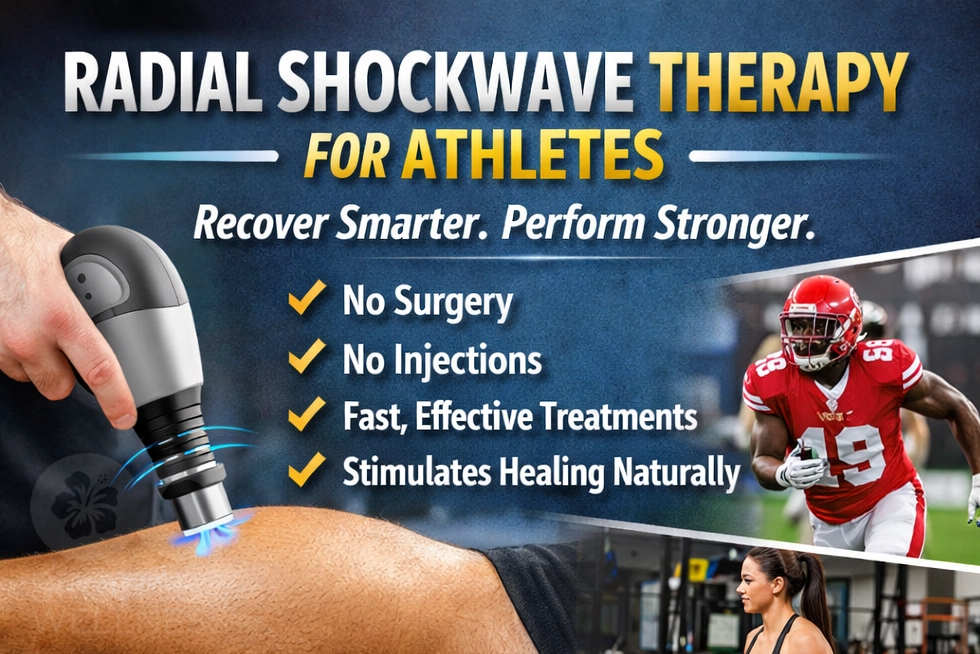
Radial shockwave therapy is a non-invasive treatment that uses acoustic pressure waves delivered through a handheld device to the injured or painful area. The applicator is placed on the skin, and a series of pulses is directed into the soft tissues. Unlike surgery, there are no incisions. Unlike injections, there are no needles. Treatment is performed in the office and usually takes only a short amount of time.
The word “shockwave” can sound intimidating, but the treatment itself is typically straightforward and manageable. In sports medicine, radial shockwave therapy is often used for muscles, tendons, fascia, and other soft tissues that are irritated, overloaded, or healing slowly. It is frequently included in broader rehabilitation programs alongside activity modification, mobility work, strengthening, manual therapy, and return-to-sport planning.
How Radial Shockwave Therapy Works
Radial shockwave therapy does not simply “mask” pain. Its goal is to stimulate the body’s own healing response. The mechanical energy delivered to tissue is thought to influence circulation, cellular activity, pain signaling, and tissue remodeling. In simple terms, it helps wake up an area that may be irritated, stagnant, or not healing as efficiently as it should.
Potential effects of radial shockwave therapy may include improved local blood flow, support for tissue regeneration, reduction in pain sensitivity, and remodeling of chronically irritated tissue. In overuse injuries, this can be especially valuable. Athletes often push through pain for weeks or months, which may allow a small problem to become persistent. Shockwave therapy can help move treatment beyond temporary symptom control and toward meaningful recovery.
Why Athletes Are Interested in This Treatment
Athletes often want three things from a treatment: it needs to be effective, it needs to fit into training and competition, and it needs to avoid unnecessary downtime. Radial shockwave therapy appeals to athletes because it checks many of those boxes. It is non-surgical, efficient, and commonly well-tolerated. Many athletes can resume normal daily activities shortly after treatment, with sport-specific recommendations from Dr. Sunshine.
This matters because athletes do not just need pain relief. They need to preserve conditioning, maintain movement quality, and return to training with confidence. A treatment that can be delivered quickly in the clinic and integrated into a larger rehabilitation plan is especially useful in sports settings where every day counts.
Early-Phase and Late-Phase Injury Care
One of the most appealing aspects of radial shockwave therapy is that it can be considered during both the early and late phases of injury management, depending on the problem being treated and the athlete’s overall plan of care.
In the early phase of injury, the focus is often on reducing pain, improving tolerance to movement, and supporting the body’s healing response without creating further irritation. In selected cases, radial shockwave therapy may be introduced early because athletes generally tolerate it well and because it can be paired with other conservative strategies such as load management, mobility work, and progressive strengthening.
In the late phase of injury, the challenge is often different. The athlete may no longer be in severe pain, but healing may feel incomplete. Stiffness, residual tenderness, poor tissue quality, or repeated flare-ups may continue to interfere with performance. This is where radial shockwave therapy is often especially helpful. It can be used to target tissue that has become chronically irritated or slow to respond, helping the athlete progress toward a stronger and more durable return to sport.
Common Athletic Conditions That May Be Treated
Radial shockwave therapy is commonly considered for a range of musculoskeletal conditions seen in athletes and active adults. These may include Achilles tendinopathy, plantar fasciitis, patellar tendinopathy, tennis elbow, hamstring-related soft tissue complaints, calf tightness, hip tendon irritation, and other overuse injuries. It may also be used in selected cases involving myofascial trigger points, scarred tissue, or chronic areas of pain that have not improved enough with rest alone.
Not every injury is a good fit for this treatment, and not every athlete needs it. The best results usually come when the diagnosis is accurate, the treatment area is selected carefully, and the therapy is delivered as part of a broader sports medicine strategy rather than as a stand-alone fix.
What Treatment Feels Like
During treatment, the clinician applies gel to the skin and places the handheld device over the target area. You will feel a series of repetitive pulses. Many athletes describe the sensation as tapping, pulsing, or a rapid mechanical percussion. Some areas feel mild, while others can feel more intense, especially if the tissue is very irritated.
Most athletes tolerate the treatment well. The settings can often be adjusted based on the location being treated, the stage of healing, and the athlete’s comfort. The goal is not to make the experience unbearable. Instead, the treatment is usually tailored to be therapeutic, efficient, and manageable. Mild soreness afterward can occur, but many people can continue with their day.
Why Treatment Time Matters in Sports
One reason shockwave therapy has gained so much attention in sports medicine is its efficiency. Treatment sessions are typically brief, which makes them easier to fit into demanding training and competition schedules. For recreational athletes, that may mean a visit that fits into a workday. For elite athletes, it means a therapy option that can be incorporated into a tightly organized performance and recovery routine.
In high-level sports, recovery blocks may need to fit between meetings, lift sessions, film review, field work, travel, manual therapy, nutrition support, and sleep planning. A treatment that can be delivered quickly without sedation, post-procedure monitoring, or a long recovery period is especially attractive. That efficiency is one of the reasons shockwave therapy has become more visible in professional sports environments.
How NFL Players Are Benefiting
NFL players deal with one of the most physically demanding schedules in sports. Their bodies absorb repeated high-force impacts, explosive accelerations, rapid changes of direction, and significant cumulative stress over the course of a season. Even when an injury is not severe enough to require surgery, it can still limit power, speed, and confidence. For that reason, NFL players and performance staff are always looking for treatment options that can support healing while keeping the athlete moving forward.
Shockwave-based treatments have become increasingly attractive in these settings because they are non-invasive, fast, and practical. Players may benefit from reduced pain, improved tolerance for rehabilitation, and better management of tendon and soft-tissue problems that can otherwise linger. Rather than relying only on rest or passive symptom relief, medical staff can integrate shockwave therapy into a more active recovery strategy built around movement, strength, tissue care, and gradual return to full performance.
In professional football, the value of time cannot be overstated. A therapy that can be delivered efficiently and then followed by supervised rehabilitation is much easier to integrate into a daily protocol than one that requires significant downtime. This makes shockwave therapy particularly useful for athletes who need a treatment that supports progress without unnecessarily disrupting their routine.
How NFL Recovery Protocols May Incorporate Shockwave Therapy
In an NFL setting, recovery is rarely based on one single treatment. Instead, athletes are managed through coordinated protocols that may include physician evaluation, imaging as needed, manual therapy, soft-tissue work, exercise therapy, mobility training, strength progression, recovery modalities, hydration, nutrition, sleep support, and practice modifications. Shockwave therapy fits well into this model because it can be layered into a structured plan rather than replacing it.
For example, a player with tendon pain may receive shockwave therapy as part of a weekly or multi-week protocol while also performing a progressive loading program, receiving hands-on treatment, and modifying practice volume. A player with a muscle-related issue may receive treatment early to support symptom relief and tissue recovery, while athletic trainers and physicians guide the rest of the rehabilitation process. The key advantage is that the therapy can often be delivered quickly, followed immediately by the next step in the athlete’s care plan.
In this way, shockwave therapy supports the larger goal of professional sports medicine: helping athletes recover efficiently, maintain function, and return to competition safely. The treatment is not a shortcut, but it can be a valuable tool within a disciplined and closely monitored recovery system.
Why Athletes Appreciate a Non-Invasive Option
Many athletes prefer to avoid more invasive interventions unless they are clearly necessary. Surgery may be essential in some cases, but when a problem can be managed conservatively, a non-invasive option is often appealing. Radial shockwave therapy offers a way to address pain and tissue dysfunction without incisions, anesthesia, or a prolonged recovery window.
This can also be psychologically helpful. Athletes often do better when they feel they are actively addressing the problem rather than simply waiting for it to improve. A treatment that is direct, targeted, and part of a performance-minded plan can increase confidence and engagement in the recovery process.
What the Research Suggests
Research in sports medicine continues to explore how shockwave therapy may help with tendon disorders, plantar fasciitis, selected bone-related conditions, and certain muscle injuries. The strongest results are often seen when the treatment is matched to the right diagnosis and combined with an appropriate rehabilitation program. In athletic populations, this combination can be especially powerful because it addresses both the biology of healing and the mechanics of movement.
Importantly, treatment plans should always be individualized. The exact number of sessions, treatment intensity, and timing within rehabilitation will vary based on the athlete’s injury, sport, competitive demands, and overall health.
What to Expect After Treatment
Some athletes notice improvement quickly, while others improve more gradually over a series of treatments. It is common for healing to unfold over time as the body responds to the stimulus. Depending on the condition, Dr. Sunshine may recommend a course of treatment along with specific exercise and activity guidelines.
You may be advised to avoid certain high-impact or high-load activities for a short period after a session, especially if the target tissue needs time to adapt. In many cases, however, the athlete remains engaged in a modified training program rather than being shut down completely. This is another reason the therapy fits so well within sports medicine: it often complements active recovery rather than replacing it.
Is Radial Shockwave Therapy Right for Every Athlete?
No treatment is right for everyone. Radial shockwave therapy is not a one-size-fits-all solution, and it should not be used without a thoughtful diagnosis and treatment plan. Some injuries require a different approach, and certain medical situations may call for additional caution. That is why proper evaluation matters.
The most important step is understanding what is actually causing the pain. Athletes are often told they are simply “tight” or “overworked” when the real issue is tendon overload, tissue degeneration, faulty biomechanics, or an uncorrected training error. Once the problem is identified clearly, the right treatment plan becomes much easier to build.
The Bigger Picture: Recovery, Performance, and Longevity
For athletes, recovery is not only about getting out of pain. It is about preserving long-term performance. A runner wants to keep running. A tennis player wants to keep serving. A football player wants to return with confidence, power, and durability. Radial shockwave therapy can play a meaningful role in that larger picture by helping calm painful tissues, support healing, and improve an athlete’s ability to move and train effectively.
When used wisely, this treatment is more than a quick fix. It is part of a performance-minded philosophy that values efficient recovery, tissue health, and long-term function. That is why athletes at many levels, from recreational competitors to professionals, are increasingly interested in how shockwave therapy can support both healing and resilience.
Personalized Sports Medicine in Orange County
At OC Sports and Wellness in Orange County, we understand that athletes and active adults do not want generic advice. They want clear answers, a thoughtful diagnosis, and a plan that helps them return to the activities that give their lives meaning. Radial shockwave therapy may be one component of that plan, especially for individuals dealing with tendon pain, soft tissue irritation, or injuries that have been slow to improve.
Our goal is to help men and women live active and fulfilling lives with care that is personalized, practical, and grounded in modern sports medicine. Whether you are recovering from a recent injury, managing a long-standing overuse problem, or looking for conservative treatment options that fit your schedule, a comprehensive evaluation can help determine whether radial shockwave therapy is an appropriate part of your recovery path.
For many athletes, the road back is not about doing more. It is about doing the right things at the right time. Radial shockwave therapy offers a promising, efficient, and well-tolerated option that may help support healing, reduce pain, and keep progress moving in the right direction.
We hope this information is helpful. At OC Sports and Wellness in Orange County, we understand the importance of balancing your health with a busy lifestyle. That’s why we offer convenient options for scheduling visits, texting, or video chatting with Dr. Sunshine. Let’s work together towards your well-being! Reach out to us at 949-460-9111.

Disclaimer: The information above is educational and not a substitute for personalized medical advice. Outcomes vary. Always consult a qualified healthcare professional to determine the best treatment for your condition.