How Exercise Affects Your Happiness and Mental Well-Being
Exercise is widely known for helping people improve their physical health, increase strength, maintain a healthy weight, and reduce the risk of chronic disease. But one of the most powerful — and often underestimated — benefits of regular physical activity is its profound effect on mental and emotional well-being. :contentReference[oaicite:0]{index=0}
Whether you enjoy walking, swimming, cycling, strength training, yoga, or recreational sports, movement can improve your mood, sharpen your thinking, reduce stress, and help you feel more energized and emotionally balanced. In many ways, exercise acts as a natural antidepressant and stress reliever, supporting both the body and the brain simultaneously.
Why Exercise Makes You Feel Happier
Physical activity creates a powerful chain reaction throughout the body and brain. When you exercise, your body releases beneficial chemicals, increases circulation, reduces inflammation, and stimulates brain areas responsible for mood regulation and cognitive performance.
Even short periods of movement can improve emotional well-being. Many people notice they feel calmer, more optimistic, and mentally refreshed after a workout or brisk walk. Over time, regular exercise can significantly improve resilience to stress and contribute to a healthier outlook on life.
How Exercise Benefits Brain Health
1. Exercise Supports Brain Growth and Adaptability
Regular physical activity encourages neurogenesis — the creation of new brain cells — particularly within the hippocampus, the region associated with memory, learning, and emotional regulation. This process helps strengthen cognitive performance and may help protect against age-related cognitive decline.
Exercise also enhances neuroplasticity, which is the brain’s ability to adapt, reorganize, and form new neural connections. Improved neuroplasticity can support learning, memory retention, emotional flexibility, and recovery from injury or stress.
2. Improved Blood Flow and Oxygen Delivery
Exercise increases circulation throughout the body, including the brain. Enhanced blood flow delivers more oxygen and essential nutrients to brain tissue, helping improve concentration, mental clarity, focus, and overall cognitive function.
Better circulation may also help reduce mental fatigue and support long-term brain health.
3. Exercise Triggers “Feel-Good” Brain Chemicals
One of the biggest reasons exercise improves mood is that it stimulates the release of important neurotransmitters and hormones that influence happiness, motivation, and emotional balance.
- Endorphins: Often called the body’s natural “feel-good” chemicals, endorphins help reduce pain and promote feelings of pleasure and relaxation.
- Serotonin: Helps regulate mood, sleep, appetite, and emotional stability. Increased serotonin levels are associated with reduced symptoms of depression and anxiety.
- Dopamine: Supports motivation, reward, focus, and enjoyment, helping you feel more driven and mentally engaged.
- Norepinephrine: Helps the body respond to stress while improving alertness, concentration, and energy levels.
4. Reduced Inflammation and Oxidative Stress
Chronic inflammation and oxidative stress have been linked to depression, anxiety, fatigue, and other mental health conditions. Regular exercise helps lower inflammation while boosting the body’s natural antioxidant defenses.
This protective effect can support both emotional wellness and long-term brain health.
Exercise and Depression
Research consistently shows that exercise can play a major role in reducing symptoms of depression. In some cases, regular physical activity has been shown to be as effective as medication for mild to moderate depression.
Exercise may help improve depression by:
- Increasing mood-supporting neurotransmitters
- Reducing inflammation associated with depression
- Improving sleep quality and energy levels
- Providing a sense of accomplishment and routine
- Boosting self-confidence and self-esteem
- Encouraging social interaction and community involvement
Even small amounts of consistent movement can create noticeable improvements in mood and emotional resilience over time.
Exercise and Anxiety
Physical activity is also highly effective for reducing anxiety and stress. Exercise helps calm the nervous system, regulate stress hormones, and redirect attention away from negative thought patterns.
Regular movement may help reduce anxiety by:
- Lowering cortisol and stress hormone levels
- Promoting relaxation and mental clarity
- Improving confidence and emotional resilience
- Helping release physical tension stored in the body
- Improving sleep and recovery
Mind-body activities such as yoga, tai chi, stretching, and mindful walking can be especially beneficial for individuals dealing with chronic stress or anxiety.
Best Types of Exercise for Mental Health
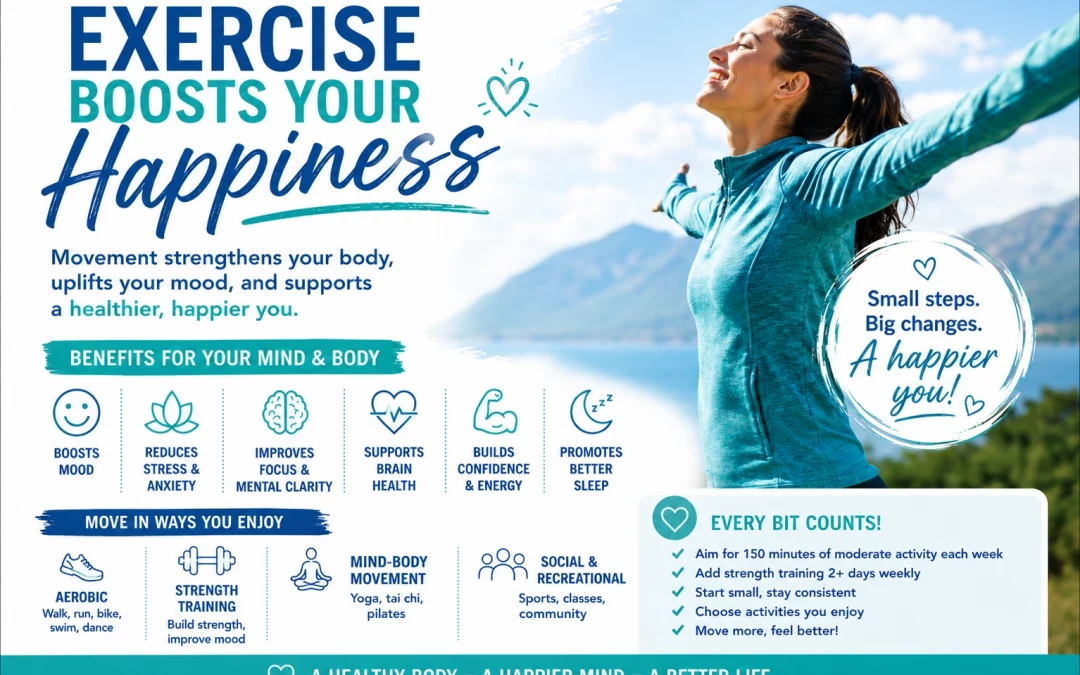
Aerobic Exercise
Activities that elevate the heart rate — such as brisk walking, jogging, swimming, hiking, dancing, rowing, or cycling — are particularly effective for improving mood and supporting brain function.
Aerobic exercise helps increase blood flow to the brain while promoting the release of endorphins and serotonin.
Strength Training
Resistance exercises such as weightlifting, bodyweight training, resistance bands, and functional fitness workouts can improve both physical and emotional health.
Strength training may help reduce symptoms of anxiety and depression while improving confidence, focus, posture, and overall resilience.
Mind-Body Movement
Yoga, Pilates, tai chi, and mobility-focused workouts combine movement with controlled breathing and mindfulness. These activities help reduce stress while improving flexibility, balance, posture, and emotional regulation.
Social and Recreational Activities
Group fitness classes, recreational sports, hiking groups, dance classes, or training with friends provide valuable social interaction and support. Positive social connections can further enhance happiness and emotional well-being.
How to Incorporate More Exercise Into Your Routine
Start Slowly and Build Consistency
If you are new to exercise or returning after time away, begin with manageable sessions and gradually increase intensity and duration. Small, consistent efforts are often more sustainable than overly aggressive routines.
Aim for:
- At least 150 minutes of moderate aerobic activity each week
- Or 75 minutes of vigorous activity weekly
- Plus strength training two or more days per week
Choose Activities You Enjoy
The best exercise program is one you can maintain long term. Try different forms of movement until you discover activities that feel enjoyable, motivating, and rewarding.
Make Movement Part of Daily Life
Exercise doesn’t always have to happen in a gym. Simple lifestyle habits can significantly increase daily movement, including:
- Taking the stairs instead of the elevator
- Walking during phone calls
- Parking farther away from entrances
- Going for short walks throughout the day
- Stretching between work tasks
- Biking or walking when possible
Pay Attention to Recovery
While movement is important, recovery is equally essential. Listen to your body and allow adequate time for rest, sleep, hydration, and muscle recovery. Overtraining or ignoring pain can increase stress on the body and lead to injury.
The Connection Between Movement and Happiness
Exercise is one of the most effective and accessible tools for improving mental health and overall quality of life. It helps support emotional balance, cognitive function, stress resilience, energy levels, and long-term brain health.
Most importantly, exercise reminds us that movement is not just about physical appearance or athletic performance — it is also about feeling better emotionally, mentally, and socially.
Whether you start with a short daily walk, strength training sessions, yoga classes, or outdoor recreation, every step toward consistent movement can contribute to a happier, healthier, and more fulfilling life.
We hope this information is helpful. At OC Sports and Wellness in Orange County, we understand the importance of balancing your health with a busy lifestyle. That’s why we offer convenient options for scheduling visits, texting, or video chatting with Dr. Sunshine. Let’s work together towards your well-being! Reach out to us at 949-460-9111.

Disclaimer: The information above is educational and not a substitute for personalized medical advice. Outcomes vary. Always consult a qualified healthcare professional to determine the best treatment for your condition.