
Osteoarthritis
Orange County, California
Pain Relief, Repair & Prevention
Understanding Osteoarthritis (OA) — What It Is and Why It Matters
Osteoarthritis (commonly called “OA”) is the most common type of arthritis — a chronic joint condition that affects millions of adults. At the simplest level, it happens when the cartilage — the smooth, slippery tissue that cushions the ends of bones in a joint — begins to break down, wear away, or become damaged.
Cartilage acts as a shock absorber and lubricant, allowing bones to glide smoothly as you move. When that protection erodes, the bones can begin to rub against each other — which causes friction, inflammation, pain, stiffness, and changes in joint shape over time. Since OA affects not only the cartilage but also bones, ligaments, and the tissues around the joint, it’s better understood today as a disease of the entire joint, not simply “wear and tear.”
Although OA becomes more common with age, it isn’t strictly an “old person disease.” Younger adults — particularly those who have had joint injuries, repetitive joint stress (e.g., from sports or physically demanding jobs), or other risk factors — can also develop OA.
Who Gets OA — Risk Factors & What Causes It
Many factors influence whether a person develops OA. Some you can’t control, some you can — and understanding them helps with prevention and management.
Common risk factors & contributing causes
- Age — As joints experience decades of use, cartilage and other joint tissues gradually endure wear and microtrauma; that’s why OA becomes more common over time.
- Past joint injuries or trauma — A serious event such as a fracture, ligament tear, or cartilage damage can trigger a faster progression to OA (sometimes referred to as “secondary OA”).
- Overuse / repetitive stress — Jobs, sports, or activities that place ongoing load on certain joints (knees, hips, spine, etc.) can accelerate cartilage breakdown.
- Body weight — Excess weight adds mechanical stress to weight-bearing joints (like knees and hips), increasing the likelihood of cartilage wear.
- Muscle weakness or poor joint support — If surrounding muscles aren’t strong enough to stabilize joints, abnormal joint stresses may arise, contributing to joint wear.
- Genetics / joint structure — Some people may inherit a predisposition to weaker cartilage, or have variations in bone/joint shape that increase OA risk.
Because of this variety of influences, OA doesn’t always look or act the same: it can develop slowly over many years or more quickly after an injury or repeated stress; it can affect different joints; and its severity varies widely between people.

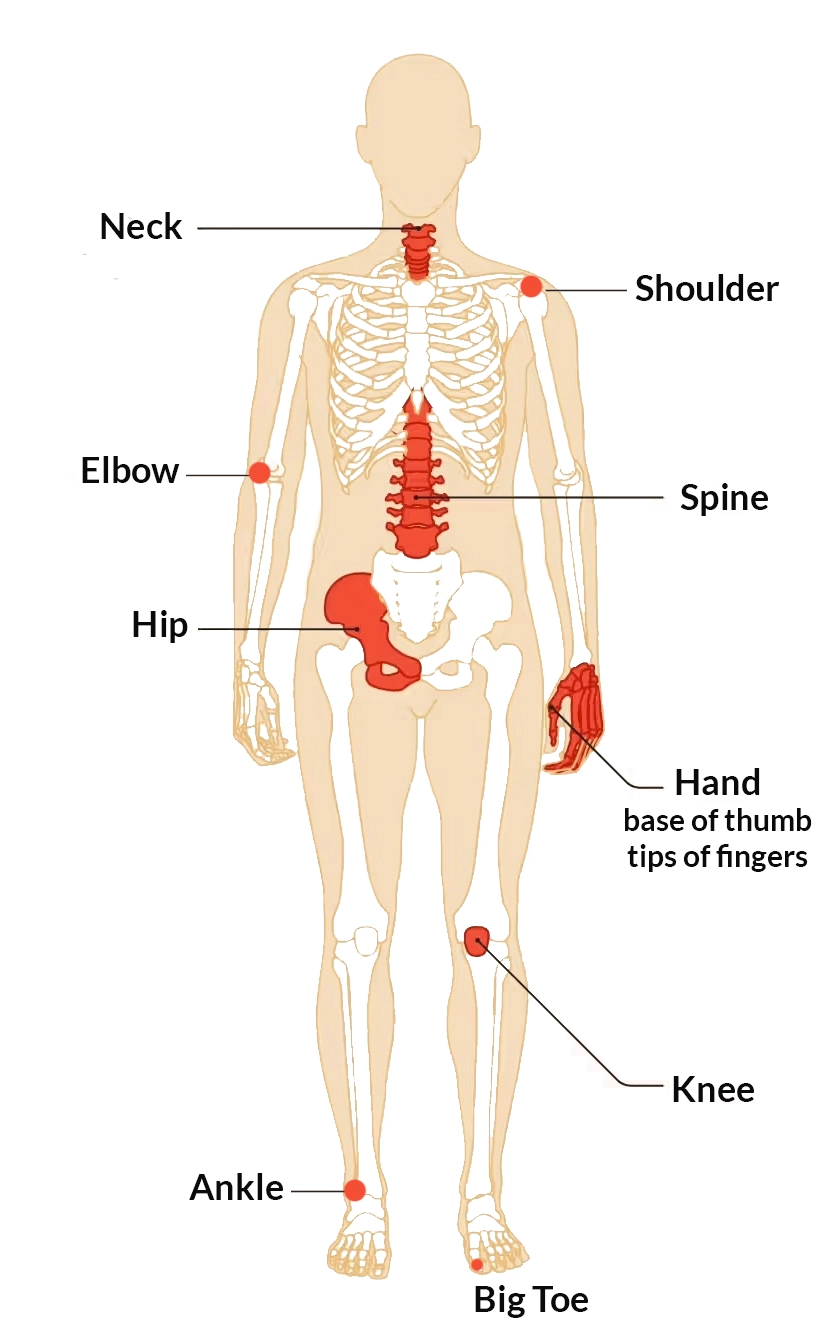
Recognizing OA — Signs, Symptoms, and When to Get Help
OA symptoms often start subtly and worsen gradually. Recognizing the early warning signs means you can act sooner — a significant advantage for preserving mobility and joint health.
Common symptoms of OA
- Joint pain or aching, especially during or after movement — or at the end of the day.
- Stiffness, especially first thing in the morning or after sitting/lying down for a while — sometimes easing with gentle movement.
- Limited range of motion — the joint may not bend or straighten as fully as before.
Sensation of grinding, scraping, or “bone-on-bone” friction in the joint, or noise like clicking, popping, or crackling. - Swelling, tenderness, or warmth around the joint.
- Joint instability, weakness, or a feeling that the joint might “give out.”
Get An Early Diagnosis — The Bigger Picture
If you notice persistent joint pain, stiffness, or mobility limitations — especially after activity, injury, or repetitive use — that’s a good time to speak with Dr. Sunshine. Because cartilage damage doesn’t reverse — there’s currently no way to “regrow” healthy cartilage — early recognition and management of OA helps slow further wear, reduce inflammation, preserve joint function, and maintain mobility.
Left unmanaged, OA can gradually erode joint function, cause chronic pain, limit mobility, and reduce overall function — affecting daily tasks, work, hobbies, sports, and overall quality of life. Moreover, joint pain and restricted mobility may lead to reduced physical activity. Reduced activity can contribute to unhealthy weight gain, reduced cardiovascular fitness, muscle weakness, and even increased risk of other chronic conditions (e.g., heart disease, diabetes) — so treating OA is also about preserving overall health, not just joint health.
That’s why early intervention, tailored treatment, and a proactive approach matter so much: with the proper care, many people with OA continue to lead active, fulfilling lives — doing the things they love, staying strong, and protecting their joints long-term.
How OA Is Diagnosed
To confirm OA, Dr. Sunshine typically combines your medical history, physical exam, and imaging (and sometimes other tests) to rule out other possible causes of joint pain.
What a typical evaluation looks like
- Review of your symptoms (when they started, what makes them worse, impact on daily life or sports/activities)
- Physical exam: assessing joint movement, tenderness, swelling, alignment, strength, and stability
- Imaging — for example, X-rays often show cartilage loss, changes in bone shape, joint space narrowing, or bone spurs (osteophytes) from chronic OA.
- In some cases, more advanced imaging (like MRI) or lab tests — especially if there’s concern about other forms of arthritis or joint problems — may be used.
This thorough evaluation helps the provider develop a personalized treatment plan: what kind of therapies, lifestyle changes, and supports will help you preserve joint health and function.
Managing OA — Living Well Without Surgery
(Regenerative Alternatives)
Good news: even though there’s no cure for OA, there are many effective ways to manage it — especially when started early. The goal is to reduce pain and inflammation, restore (or preserve) range of motion and strength, support joint stability, and slow further degeneration.
Here’s how a comprehensive program — like the one offered by OC Sports and Wellness — approaches OA treatment and management:
Cutting-edge regenerative & minimally invasive therapies
At OC Sports and Wellness, patients have access to advanced, non-surgical options aimed at repairing and rejuvenating joint tissues — which can reduce pain, slow degeneration, improve mobility, and help you stay active.
- Platelet‑Rich Plasma (PRP) Injections — PRP therapy uses your own blood components to stimulate healing, reduce inflammation, and encourage tissue repair. For many active adults with OA, PRP offers improved joint stability and flexibility without the downtime of surgery.
- Other regenerative or supportive therapies — Depending on your joint condition and history, options such as viscosupplementation (e.g., hyaluronic acid injections), guided injections, or other joint-supporting treatments may be considered.
Non-surgical, proactive, patient-centered care
- Physical therapy & targeted exercise: Strengthening muscles around the affected joint — for example, the quadriceps around the knee — helps reduce stress on the joint itself, improves stability, increases flexibility, and supports safer movement. Low-impact activities like swimming, cycling, or resistance training are often recommended.
- Lifestyle changes: Healthy weight management, proper nutrition, and joint-protective habits make a big difference. A diet rich in anti-inflammatory foods (like fruits, vegetables, lean proteins, omega-3s) supports joint health. Avoiding repetitive high-impact movements, using proper form/gear for sports or work, and wearing supportive footwear or braces as needed can also reduce ongoing joint stress.
- Pain management & joint support: Non-steroidal anti-inflammatory drugs (NSAIDs), topical treatments, bracing, orthotics, or assistive devices can help manage pain or discomfort, relieve swelling, and support joint function.
We offer a holistic, individualized approach
What makes a difference — especially for active adults — is a treatment plan that considers not just the joint, but your lifestyle, activity levels, goals, and overall health. That’s the philosophy at OC Sports and Wellness: personalized care, combining traditional therapies, regenerative medicine, and lifestyle guidance to help you maintain mobility, performance, and quality of life.
How OC Sports and Wellness Supports OA Patients
At OC Sports and Wellness, the focus is on non-surgical, integrative, patient-centered care — especially for active adults who want to stay mobile and continue their lifestyle.
What you can expect:
- A thorough evaluation — medical history, physical exam, imaging if needed, to understand your joint health and create a clear diagnosis.
- A personalized treatment plan — tailored to your age, activity level, joints involved, and goals (e.g., remaining active, returning to sports, reducing pain, preventing further damage).
- Access to advanced regenerative therapies like PRP and other minimally invasive treatments, which aim not just to ease pain but to support healing and joint longevity.
- Supportive therapy and education — from PT and exercises to nutrition, lifestyle changes, joint protection strategies, and long-term maintenance guidance.
- A holistic view of your health — understanding that joint care is part of your overall well-being: physical fitness, mobility, pain management, and quality of life.
Take Charge of Your Joints — What You Can Do Now
- Pay attention to early signs of OA: joint pain and stiffness — especially after activity or in the morning — clicking or grinding sensations, swelling, limited movement, or instability.
- Speak with a qualified provider (like us) if symptoms persist — even if they start mild. Early intervention can slow progression and preserve joint function.
- Adopt joint-friendly habits: maintain a healthy weight, stay active with low-impact exercises, build joint-strengthening muscles, use proper gear and techniques when exercising or working, and support joint health with a healthy diet.
Explore non-surgical and regenerative treatment options — especially if you want to stay active but reduce pain and joint stress. - Focus on long-term joint health — not just pain relief.