Musculoskeletal Disorders & Body Pain
Orange County, California
Pain Relief, Repair & Prevention
Understanding Musculoskeletal Disorders & Body Pain
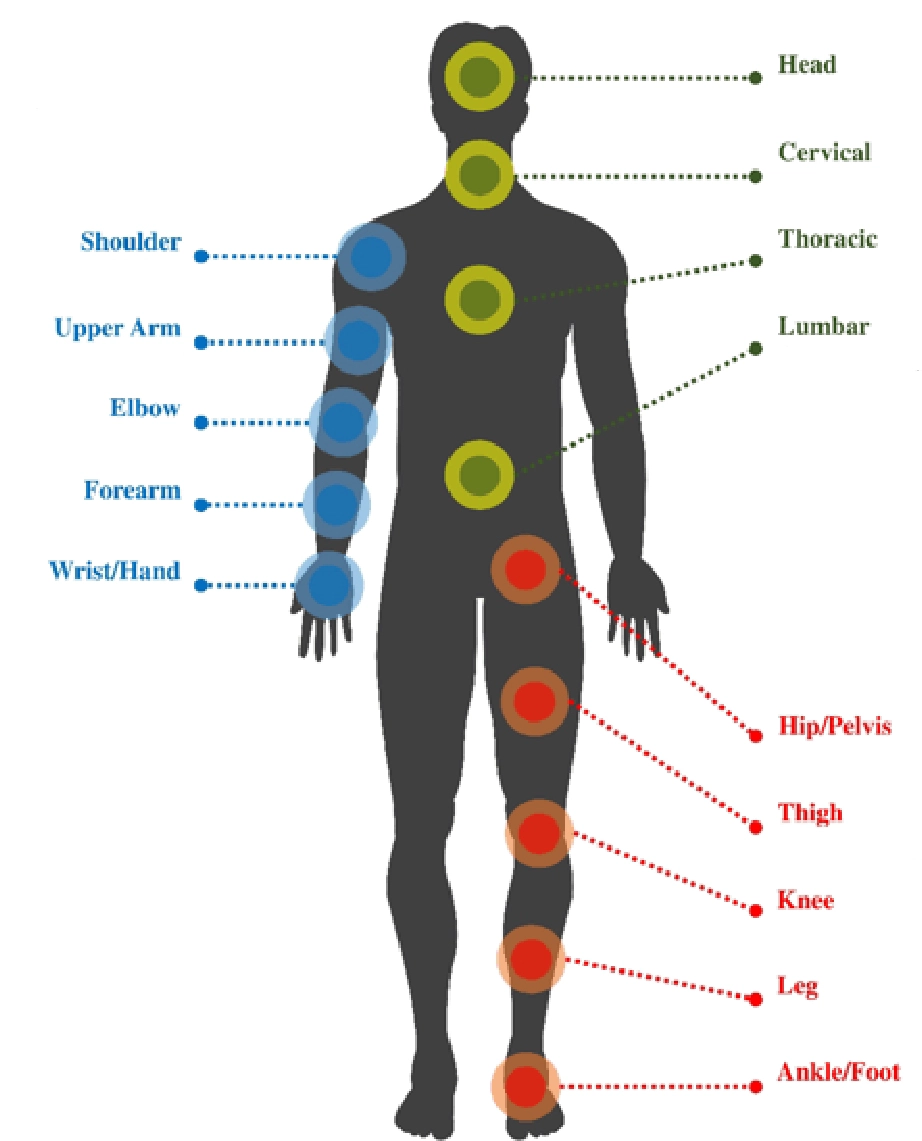
When we talk about musculoskeletal disorders (MSDs) — also referred to as “body pain” — we mean a broad set of conditions that affect the structures that support and move your body: bones, joints, muscles, tendons, ligaments, and connective tissue.
These conditions can cause pain, stiffness, weakness, and reduced function — potentially interfering with everyday tasks, sports, work, or even simple movements. In severe cases, they can greatly reduce quality of life.
Musculoskeletal issues are extremely common, and affect people of all ages — from athletes to older adults, from weekend warriors to those simply trying to stay active.
What Causes Musculoskeletal Pain?
MSDs and body pain can arise from many triggers:
- Acute injuries — such as sprains, strains, fractures, tendon or ligament tears, dislocations, or direct trauma (e.g., a fall or sports impact).
- Overuse or repetitive stress — repeated movements (from sports, work, or daily activities) can gradually strain muscles, tendons, or joints, leading to inflammation, tendonitis, or chronic aches.
- Degenerative or chronic conditions — such as osteoarthritis (wear-and-tear of joint cartilage), chronic back pain, age-related joint degeneration, or long-term soft tissue stress.
- Poor posture or improper biomechanics — including muscle imbalances or repetitive poor movement patterns (especially in sedentary work or frequent lifting) — can contribute to muscle or joint pain over time.
- Nerve-related or systemic conditions — in some cases, nerve entrapments or systemic disorders (for example, chronic pain syndromes) can manifest as generalized musculoskeletal pain.
Because so many different tissues and mechanisms are involved — bones, joints, soft tissue, nerves — the symptoms of MSDs can vary widely, from a dull ache deep inside a bone or joint, to sharp pains with movement, stiffness, or reduced flexibility and mobility.
What to Expect When You Come for Care
Visiting a dedicated musculoskeletal or sports-medicine provider isn’t just for elite athletes — it’s for anyone experiencing pain, limitation, or recurring aches.
When you first come in:
- Dr. Sunshine (physician and sports-medicine doctor) will review your medical history, ask about your symptoms (when they started, what aggravates or relieves them, any prior injuries), and about your general health, lifestyle, and activity level.
- A careful physical exam will be done — assessing strength, range of motion, joint mobility, posture, muscle balance, and possibly comparing both limbs or sides to spot asymmetries or impairments.
- If needed, diagnostic imaging or tests (X-rays, MRI/CT, ultrasound, etc.) may be ordered to understand better what’s going on — especially for more complex or chronic issues.
- Based on what’s discovered, a personalized treatment plan will be recommended — focusing first on non-surgical, conservative options whenever possible.
How Treatments Work —
From Day One to Recovery
Because musculoskeletal issues vary so much in type and severity, treatment is rarely “one-size-fits-all.” The focus is often on restoring function, relieving pain, and preventing recurrence. Common approaches include:
- Activity modification & rest — adjusting or temporarily avoiding aggravating activities to allow healing, while avoiding complete immobility (which can worsen stiffness or weakness).
- Heat, ice, and pain/inflammation management — using cold or heat therapy, and sometimes medication, to relieve discomfort and reduce inflammation during the acute phase.
- Physical therapy and rehabilitation — often the cornerstone of recovery. A trained therapist guides you through stretching for flexibility, strengthening weak or imbalanced muscles, improving joint mobility, correcting posture or movement patterns, and a gradual return to activity.
- Manual therapy & hands-on techniques — many practitioners offer techniques like joint mobilization, hands-on soft tissue work, or other manual modalities designed to reduce pain, improve joint mobility, loosen tight muscles, and restore normal movement.
- Assistive devices, when needed — braces, supports, or mobility aids (canes, walkers) may be prescribed temporarily if pain or weakness hampers movement.
- Ongoing management & prevention — once pain is under control and function improves, the focus shifts to strengthening, maintenance exercises, posture/work-habit corrections, and possibly lifestyle modifications to prevent flare-ups or reinjury.
For many patients — whether recovering from an acute injury, fighting chronic pain, or returning from a flare-up — this comprehensive, conservative approach is often sufficient to relieve pain, restore mobility, and help return to normal daily life or athletic activity.
Why It Matters — And When to Seek Help
Because the musculoskeletal system is foundational to everything we do (walking, lifting, working, playing sports, even sitting), problems here can ripple into nearly every aspect of life.
Left untreated, some disorders may worsen — leading to chronic pain, reduced mobility or function, and even disability.
If you experience persistent pain, stiffness, swelling, or loss of strength — especially if it interferes with work, exercise, or daily tasks — it’s worth consulting a musculoskeletal or sports-medicine specialist. Early evaluation often means simpler, more effective treatment with better long-term outcomes.
How We Help —
Our Approach at OC Sports & Wellness
At our practice, we emphasize non-surgical, patient-tailored care for body pain and MSDs. We evaluate each person individually — considering their history, lifestyle, activity level, and goals — to build a plan that works for their life.
We believe in combining:
- Careful diagnosis and assessment
- Physical therapy and functional rehabilitation
- Hands-on/manual therapy when appropriate
- Pain/inflammation management (ice/heat, medications)
- Use of supportive devices if needed
- Preventive strategies to reduce the risk of recurrence or new injuries
Our goal is not just to relieve pain — but to help you regain mobility, strength, and confidence so you can return to the activities and life you enjoy.