
Elbow Pain Specialist
Orange County, California
Pain Relief, Repair & Prevention
Understanding Elbow Pain: Why It Happens & How We Help
Elbow pain can make even simple daily tasks difficult. Whether you’re trying to lift a cup of coffee, type on a keyboard, grip a steering wheel, or play your favorite sport, discomfort in the elbow can quickly limit your activity and quality of life.
The elbow might seem simple — a hinge in the arm — but it’s actually a complex joint essential for countless daily activities: bending and straightening the arm, rotating the forearm, lifting, gripping, throwing, typing, cooking, and more. Because of this, even minor injuries or overuse can significantly impact your daily life.
At OC Sports and Wellness, we help patients understand why their elbow hurts and provide effective, personalized treatment to relieve pain and restore function. We aim to go beyond masking pain. We focus on pinpointing the root cause of your discomfort — whether it’s tendon inflammation, nerve irritation, arthritis, or structural damage — and then creating a plan to relieve pain and restore elbow function.
Common Causes of Elbow Pain
Elbow pain can arise from many different conditions. Some of the most frequent include:
Tendon Overuse & Tendonitis (“Epicondylitis”)
- Tennis Elbow (Lateral Epicondylitis): This occurs when the tendons that connect your forearm muscles to the outside (lateral side) of the elbow become overused or develop microscopic tears. It’s common not only in tennis players, but in anyone who repeatedly uses the forearm — e.g., lifting, gripping, typing, painting, hammering, and tool use.
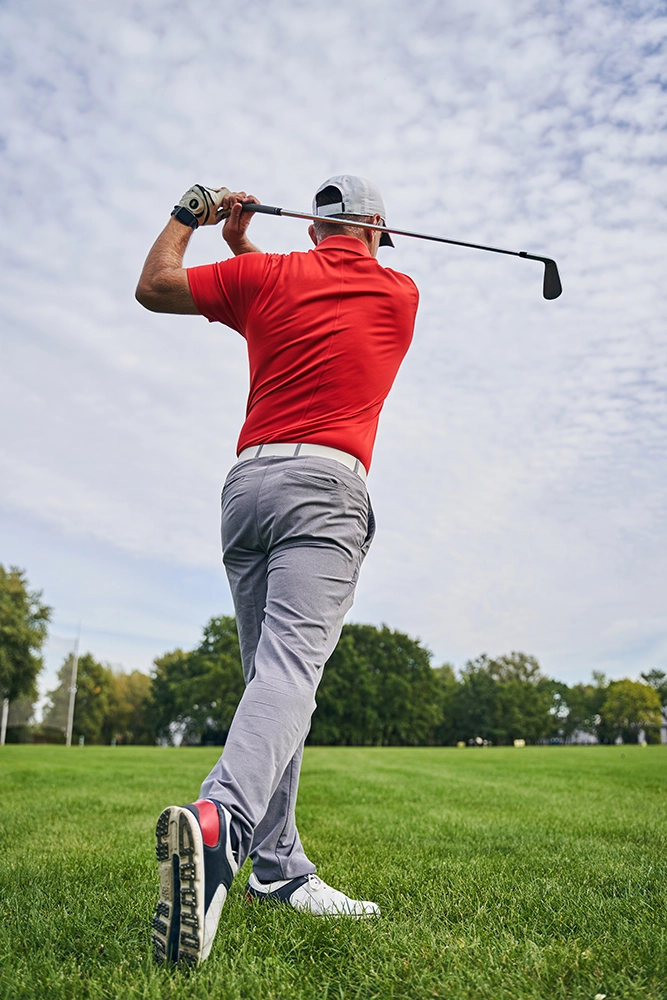
- Golfer’s Elbow (Medial Epicondylitis): Similar to tennis elbow, but affecting the inside (medial side) of the elbow. The tendons that flex the wrist and fingers — used for gripping or wrist-bending motions — become irritated. Despite the name, this condition affects many people who don’t play golf.
- Both conditions may start gradually: pain often increases over time rather than from a single injury.
Nerve Irritation or Compression
For example, Cubital Tunnel Syndrome occurs when the ulnar nerve (which runs from the neck down into the hand) becomes compressed at the elbow. This may cause tingling or numbness — especially in the ring and little fingers — and sometimes pain or weakness.
Tendon or Ligament Tears, Biceps Tendon Injuries
Some conditions involve more serious damage — for instance, a distal biceps tendon rupture (common in heavy lifting), or partial tears of elbow ligaments (often in throwing athletes). These injuries often require specialized evaluation and may need surgical repair.
Arthritis or Joint Wear-and-Tear
Over time, the elbow joint can wear down due to degenerative changes. This may lead to pain, stiffness, limited range of motion, and reduced function — especially for people who perform repeated elbow movements or heavy lifting.
Bursitis or Inflammation of the Soft Tissue
Sometimes pain can come from inflamed bursae (fluid-filled sacs near the joint), scar tissue, or general inflammatory conditions causing swelling, irritation, or restricted movement.
Recognizing the Symptoms: What You Might Feel
Because there are many potential causes, elbow pain can feel different from person to person. Common symptoms include:
- A dull ache when at rest; pain when using the arm.
- Pain when making a fist (common with golfer’s elbow) or pain when straightening/opening the fingers (common with tennis elbow).
- Tenderness or soreness around the bony bump of the elbow (the “epicondyle”).
- Weak grip strength — difficulty holding onto objects or performing tasks like turning a doorknob or lifting a coffee cup.
- Pain that may radiate down the forearm, wrist, or even into the hand; occasionally tingling or numbness (especially with nerve-related issues).
- Stiffness, reduced range of motion, or swelling.
Because symptoms overlap across different conditions, it’s difficult (and often misleading) to self-diagnose. Timely and accurate diagnosis is a crucial first step toward effective treatment.

How We Diagnose Elbow Issues
At OC Sports and Wellness, we believe in finding the root cause, not just treating symptoms. Here’s what an initial evaluation usually involves:
- A thorough medical history: when the pain started, what activities make it better or worse, any prior injuries, or sports/work history.
- Physical examination: to assess tenderness, range of motion, grip strength, nerve function, and other signs.
- When necessary — imaging studies (like X-ray, MRI, or ultrasound) or nerve studies to detect tendon damage, bone issues, cartilage wear, nerve compression, and other structural problems.
With a precise diagnosis, we can tailor a treatment plan to your specific needs, whether that’s a mild overuse injury, chronic tendon degeneration, nerve irritation, or structural damage.
Conservative & Non-Surgical Treatments
- Rest, Ice, and Activity Modification (RICE): Often the first-line approach, especially for overuse injuries. Taking a break from aggravating activities gives your tendons a chance to heal.
- Physical Therapy: Targeted exercises to stretch and strengthen forearm muscles, improve flexibility, and correct movement patterns. A structured rehab program is often key to long-term recovery.
- Bracing or Support: Wearing a counter-force brace or elbow strap can help reduce tendon strain during daily activities or work.
- Anti-inflammatory Medications: Non-steroidal anti-inflammatories (NSAIDs) can reduce pain and swelling during flare-ups.
When Conservative Treatments Aren’t Enough
- Injections (e.g., Cortisone or Other Biologics): For persistent tendon inflammation — injections can help control pain and inflammation when rest and therapy don’t suffice.
- Advanced Interventions or Outpatient Surgery: In cases of tendon rupture, ligament injury, severe arthritis, or persistent tendon degeneration — minimally invasive surgical options (e.g., arthroscopy, tendon/ligament repair) may be considered.
Preventing Future Elbow Problems
& Supporting Long-Term Health
At OC Sports and Wellness, we don’t just treat — we also help you prevent recurrence. For many overuse issues, changing habits, strengthening supporting muscles, and correcting technique are crucial.
Some of the preventive recommendations we might give:
- Incorporate forearm strength and flexibility exercises (e.g., wrist extensions/flexions, grip exercises) to build resilience.
- Avoid repetitive stress when possible — take frequent breaks, alternate tasks, and vary your movements.
- If you play sports or use tools often: check your technique, use ergonomically appropriate gear, and warm up properly.
- Use bracing or support when needed, especially during aggravating activities.
By combining smart prevention with careful management, many patients recover fully — often without surgery — and return to their active lives stronger and better than before.
Why Choose OC Sports and Wellness for Elbow Pain
- We don’t just treat symptoms. We dig deeper to identify the exact cause of your pain — whether tendon irritation, nerve compression, arthritis, or structural damage.
- We focus on conservative, minimally invasive care first: personalized rehab, physical therapy, bracing, and injections when needed.
- If surgery is required, we offer modern outpatient options (e.g., arthroscopy, tendon/ligament repair) — often with quicker recovery and less disruption to your life.
- Most importantly: we treat you as a partner in your recovery — educating you, empowering you to make informed decisions, and helping you protect your elbows for life-long function.