
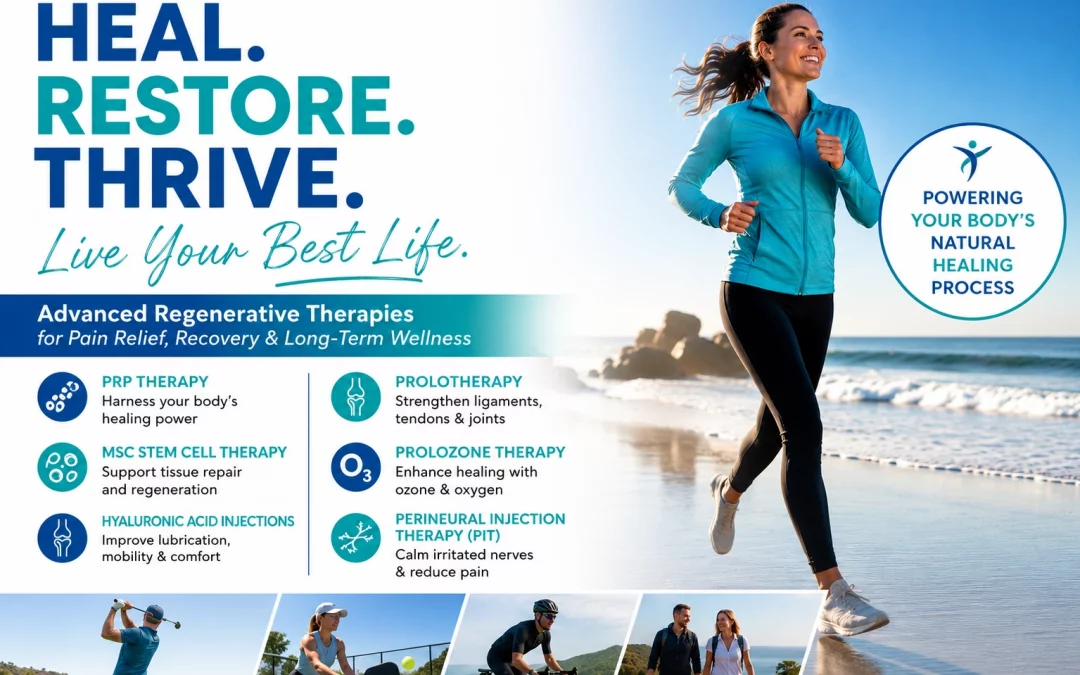
Regenerative Sports Medicine
Regenerative sports medicine focuses on harnessing the body’s natural healing abilities to repair damaged tissues, reduce pain, restore function, and improve recovery. These advanced therapies are designed to support healing at the source of injury rather than simply masking symptoms. For athletes, active adults, and individuals seeking non-surgical treatment options, regenerative medicine offers innovative approaches that may help improve mobility, accelerate recovery, and optimize long-term musculoskeletal health.
Common regenerative therapies include hyaluronic acid injections, platelet-rich plasma (PRP) therapy, MSC stem cell therapy, prolotherapy, prolozone therapy, and perineural injection therapy. Each treatment works differently but shares the common goal of promoting tissue repair and improving overall function.
Hyaluronic Acid (HA) Injections
Hyaluronic acid is a naturally occurring substance found in joint synovial fluid. It acts as both a lubricant and shock absorber, helping joints move smoothly while reducing friction and irritation.
How It Works
HA injections are designed to supplement the body’s natural joint fluid, improving cushioning and lubrication within the joint. This can help decrease discomfort, improve mobility, and support joint function in patients experiencing degeneration or inflammation.
Common Applications
- Osteoarthritis
- Knee pain and stiffness
- Joint discomfort and reduced mobility
- Degenerative joint conditions
Potential Benefits
- Non-surgical treatment option
- Minimal downtime
- Improved joint lubrication and comfort
- Enhanced mobility and daily function
- May help delay more invasive procedures such as joint replacement
Platelet-Rich Plasma (PRP) Therapy
Platelet-rich plasma therapy uses components derived from the patient’s own blood to support healing and tissue repair. Platelets contain growth factors that play a critical role in the body’s natural recovery process.
How It Works
A small blood sample is collected and processed to concentrate the platelets. The PRP is then injected into the injured or painful area. These concentrated growth factors may help stimulate tissue healing, reduce inflammation, and encourage regeneration.
Common Applications
- Tendon injuries such as tennis elbow and Achilles tendinitis
- Ligament injuries
- Muscle strains
- Joint pain and osteoarthritis
- Sports-related overuse injuries
Potential Benefits
- Utilizes the body’s own healing mechanisms
- May accelerate recovery and tissue repair
- Can reduce inflammation and discomfort
- Minimally invasive procedure
- Low risk of adverse reaction since it uses the patient’s own blood
MSC Stem Cell Therapy
MSC stem cell therapy is an advanced regenerative treatment that utilizes mesenchymal signaling cells (MSCs) to support the body’s healing and repair processes. MSCs are known for their ability to assist with tissue regeneration, modulate inflammation, and support cellular communication within damaged tissues.
How It Works
MSC-based therapies introduce regenerative cells and biologic signaling factors into injured or degenerative areas. These cells may help stimulate repair responses, support tissue healing, and reduce inflammatory processes that contribute to chronic pain and dysfunction.
MSC therapies are commonly used in regenerative medicine because of their ability to support the healing environment surrounding tendons, ligaments, cartilage, muscles, and joints.
Common Applications
- Joint degeneration and osteoarthritis
- Tendon and ligament injuries
- Sports-related injuries
- Chronic musculoskeletal pain
- Cartilage-related conditions
- Recovery support for active individuals
Potential Benefits
- Supports tissue repair and regeneration
- May reduce inflammation and discomfort
- Can improve mobility and function
- Minimally invasive alternative to surgery for select patients
- Designed to promote long-term healing rather than temporary symptom relief
Prolotherapy
Prolotherapy, also known as proliferative therapy, is a regenerative treatment designed to stimulate the body’s natural healing response by injecting an irritant solution into weakened or injured tissues.
How It Works
The injected solution, often containing dextrose, creates a mild and controlled inflammatory response. This response helps stimulate the body’s healing mechanisms, encouraging the repair and strengthening of damaged ligaments, tendons, and supporting structures.
Common Applications
- Chronic tendon and ligament injuries
- Joint instability
- Osteoarthritis
- Chronic musculoskeletal pain
Potential Benefits
- Non-surgical treatment option
- Can help strengthen weakened tissues
- May improve joint stability and function
- Long-lasting pain relief for some patients
Prolozone Therapy
Prolozone therapy combines the principles of prolotherapy with ozone therapy to further support healing and tissue oxygenation.
How It Works
Ozone and supportive therapeutic substances are injected into the affected area. Ozone may help improve oxygen delivery, circulation, and cellular activity, creating an environment that supports tissue repair and recovery.
Common Applications
- Joint pain and arthritis
- Tendon and ligament injuries
- Chronic pain conditions
- Sports injuries
Potential Benefits
- Supports the body’s healing response
- May reduce inflammation and discomfort
- Can improve circulation and tissue oxygenation
- Promotes tissue regeneration and recovery
Perineural Injection Therapy (PIT)
Perineural injection therapy is a minimally invasive treatment designed to calm irritated nerves and reduce chronic pain. It is commonly used for nerve-related pain conditions and musculoskeletal injuries involving inflammation around superficial nerves.
How It Works
PIT involves injecting a low-concentration dextrose solution into the area around inflamed or irritated nerves just beneath the skin. This may help reduce nerve irritation, calm inflammation, and support improved nerve function.
Common Applications
- Neuropathic pain
- Chronic pain syndromes
- Tendon and ligament injuries
- Sports injuries
- Persistent nerve irritation
Potential Benefits
- Minimally invasive treatment option
- Can reduce chronic pain and inflammation
- May improve nerve function and mobility
- Little downtime for most patients
The Goal of Regenerative Sports Medicine
Regenerative therapies are designed to help the body heal more efficiently while supporting improved performance, mobility, and quality of life. Rather than simply masking pain, these treatments aim to address underlying tissue damage and dysfunction.
Whether treating sports injuries, chronic tendon pain, arthritis, or joint instability, regenerative medicine offers promising non-surgical solutions for many patients seeking long-term improvement. By promoting tissue repair, reducing inflammation, and enhancing recovery, therapies such as HA injections, PRP, MSC stem cell therapy, prolotherapy, prolozone therapy, and perineural injection therapy may help individuals return to the activities they enjoy with greater comfort and confidence.
We hope this information is helpful. At OC Sports and Wellness in Orange County, we understand the importance of balancing your health with a busy lifestyle. That’s why we offer convenient options for scheduling visits, texting, or video chatting with Dr. Sunshine. Let’s work together towards your well-being! Reach out to us at 949-460-9111.

Disclaimer: The information above is educational and not a substitute for personalized medical advice. Outcomes vary. Always consult a qualified healthcare professional to determine the best treatment for your condition.